One moment you were walking through a Houston grocery store, the next you were on the floor, stunned and in pain. The initial embarrassment quickly gives way to the serious reality of an injury caused by a property owner’s carelessness.
Now, you face medical bills and time away from work, all while asking a critical question. Determining who is liable in a slip and fall accident is a complex process grounded in Texas law, focusing on what the property owner knew and what they failed to do to keep you safe.
Finding your footing
After a fall, your world can feel unsteady. Understanding these fundamental legal principles provides a solid foundation, empowering you to protect your rights as you move forward.
- A property owner's responsibility depends on your reason for being there. In Texas, visitors are classified as invitees, licensees, or trespassers, and the owner owes a different level of care to each.
- To hold an owner liable, you generally must show they knew, or should have known, about the dangerous condition that caused your fall and failed to fix it or warn you about it.
- Your own actions will be examined. Texas law considers whether you were paying attention or contributed to the accident, which can affect the amount of compensation you may pursue.
- The property owner is not the only potentially liable party. A management company, a maintenance contractor, or a commercial tenant could also share responsibility for the hazardous condition.
Premises Liability in Texas

When you are injured on someone else’s property, the legal principle that governs your case is called premises liability. This area of law holds property owners and occupiers responsible for ensuring their grounds are reasonably safe for visitors. It is not about blame; it is about accountability for safety. Consulting an experienced premises liability lawyer can help you understand your rights and pursue fair compensation for your injuries.
The property owner’s duty of care
A property owner is not automatically responsible for every injury that occurs on their premises. Their legal responsibility, or “duty of care,” hinges on your status as a visitor at the time of the incident. Texas law recognizes three distinct categories of visitors.
Invitees
An invitee is someone who enters a property for the mutual benefit of both themselves and the owner. This includes customers in a store, diners in a restaurant, or clients in an office building. Property owners owe the highest duty of care to invitees. They must protect invitees from dangers they know about and dangers they should know about through reasonable inspection.
Licensees
A licensee is a person who enters a property with the owner's permission but for their own benefit, not the owner's. A social guest at a friend’s home is a common example of a licensee. The property owner has a duty to warn a licensee of known dangers but does not have a duty to inspect the property for unknown hazards.
Trespassers
A trespasser is someone who enters a property without any legal right or permission. Generally, a property owner owes no duty to a trespasser other than to not intentionally injure them. There are important exceptions to this rule, particularly concerning children.
Proving Who is Liable in a Slip and Fall Accident
Establishing liability is the core of any slip and fall claim. Success depends on presenting clear evidence that the property owner breached their duty of care and that this breach directly caused your injuries.
This process is more detailed than many people realize.
Actual notice vs. constructive notice
To hold an owner liable, you must typically show they had notice of the dangerous condition. The law recognizes two types of notice. "Actual notice" means the owner or their employee actually knew about the hazard, for example, if a customer reported a spill.
"Constructive notice" means the condition existed for so long that a reasonably attentive owner should have discovered it. A puddle from a leaky freezer that has been there for hours is an example of a hazard the owner had constructive notice of.
Presenting evidence is how you demonstrate that the property owner knew or should have known about the danger. A thorough investigation uncovers the facts needed to build a strong claim.
An effective investigation seeks to gather specific types of proof.
- Photos and videos of the hazardous condition and the surrounding area.
- Statements from any witnesses who saw the fall or the hazard itself.
- Incident reports filed with the store or property manager.
- Records of prior complaints or similar accidents at the location.
- Surveillance footage that may have captured the incident.
This collection of evidence creates a detailed timeline and a clear picture of the property owner's failure to maintain a safe environment. It shifts the focus from a simple "accident" to a preventable injury caused by negligence.
Preserving evidence
Evidence after a slip and fall can disappear quickly. Spills are cleaned up, broken tiles are repaired, and witnesses may become hard to find. Taking immediate steps to document the scene and your injuries is a powerful way to protect the integrity of your claim.
Common Defenses in Slip and Fall Cases
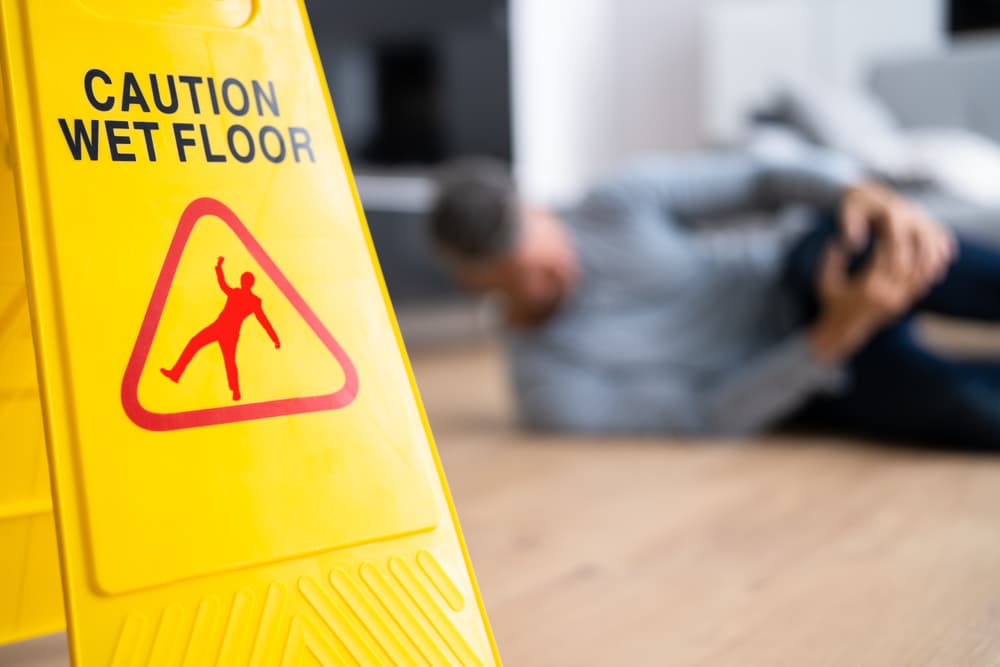
Property owners and their insurance companies often use several common arguments to deny responsibility or reduce the value of a claim. Anticipating these defenses is a key part of building a case that can withstand their challenges.
The "open and obvious" doctrine
A frequent defense is the claim that the hazard was "open and obvious." The owner will argue that any reasonably careful person would have seen and avoided the danger. They might claim a stack of boxes in an aisle or a brightly colored spill should have been easily visible.
Texas's Comparative Fault Rule
Insurers will almost always try to shift some or all of the blame onto you. They may claim you were distracted by your phone, not wearing appropriate footwear, or were in an area of the store where you were not supposed to be. This strategy directly invokes Texas's modified comparative fault law.
Under this rule, you can still pursue compensation as long as you are found to be 50% or less responsible for the accident. However, your final financial recovery is reduced by your percentage of fault. If a jury finds you were 20% at fault, your award is reduced by 20%. If they find you 51% or more at fault, you recover nothing.
Who Else Might Be Liable in a Slip and Fall Accident?
While the property owner is the most obvious defendant, they may not be the only one. In a commercial setting, like a shopping center in the Galleria area or a downtown office tower, multiple parties may share responsibility for maintaining safe conditions.
Commercial tenants and landlords
In many commercial leases, the tenant is responsible for the safety of the interior of their rented space, while the landlord is responsible for common areas like parking lots, sidewalks, and hallways. Determining liability may require a careful review of the lease agreement.
Third-party contractors and management companies
Property owners often hire outside companies to handle maintenance, cleaning, or security. If a cleaning company fails to put up a "wet floor" sign or a landscaping crew creates a tripping hazard, that third-party contractor may be held liable for any resulting injuries.
The Centers for Disease Control and Prevention (CDC) reports that one out of five falls causes a serious injury, such as a broken bone or a head injury. These statistics highlight the very real physical and financial consequences of a fall that could have been prevented.
Why AI Cannot Determine Liability for You
You may consider using an AI chatbot to get information about your fall. However, these programs cannot provide legal advice.
An AI does not know the specific maintenance codes for Harris County, cannot interpret a commercial lease agreement, and fails to grasp how a jury might apply Texas's comparative fault rule to the facts of your case.
For legal guidance based on real-world experience, you need to consult a qualified human attorney.
FAQ for Who is Liable in a Slip and Fall Accident
What should I do immediately after a slip and fall accident?
First, seek medical attention for your injuries. Then, if you are able, report the incident to the property manager or owner and make sure an official report is created. Use your phone to take pictures of the exact location and the hazard that caused you to fall. Finally, write down everything you remember about the incident as soon as possible.
Does a "wet floor" sign completely protect the owner from liability?
Not necessarily. A warning sign is one factor a court will consider. However, if the sign was not clearly visible, was placed too far from the hazard, or if the condition was unreasonably dangerous even with a sign, the owner may still be held liable. The sign does not give the owner a free pass to maintain a dangerous property.
What if I fell on public property, like a city sidewalk or in a park?
Bringing a claim against a government entity in Texas involves a different set of rules and much shorter deadlines under the Texas Tort Claims Act. You must provide a formal notice of your claim to the correct government body very quickly, sometimes within just a few months of the injury.
How long do I have to file a slip and fall lawsuit in Texas?
For most slip and fall cases against private parties, the statute of limitations in Texas is two years from the date of the accident. If you do not file a lawsuit within this period, you will likely lose your right to pursue compensation forever.
Take the Next Step Toward Accountability
An injury from a slip and fall can disrupt your entire life. You do not have to face the legal process or the insurance companies alone. A dedicated legal team can manage the complexities of your claim, allowing you to focus your energy on healing and getting your life back on track.
If you were injured on someone else’s property in the Houston area, contact AP Law Group today at (713) 913-4627 or fill out our online form. Our experienced slip and fall lawyer offers a free, no-obligation consultation to discuss your case and explain your legal options.
We are ready to stand by your side and fight for you, and you pay nothing unless we win.