You replay the moments before the crash, trying to make sense of a collision that felt both sudden and inevitable. Most often, the other driver offers a simple, infuriating excuse: "I just didn't see you."
This phrase is not a reason; it is an admission of negligence. The true causes of motorcycle accidents are rarely a mystery. They are predictable failures by other motorists who fail to share the road safely, leaving you with serious injuries and a difficult battle for justice on Houston's busy streets.
Reading the road signs
The aftermath of a motorcycle crash is disorienting. Knowing the common factors that lead to these incidents provides a clearer view of the road ahead and helps you protect your rights.
- The majority of motorcycle accidents involving another vehicle result from the other driver's actions, not the rider's. Inattention and failure to yield the right of way are leading contributors.
- Intersections, particularly during left hand turns by cars and trucks, represent the single most dangerous situation for a motorcyclist. Drivers misjudge a rider's speed and distance with alarming frequency.
- A pervasive and unfair bias exists against motorcyclists. Insurance companies often leverage this stereotype to shift blame onto the rider. Strong evidence of the other driver's fault is essential.
- Road hazards, such as potholes, loose gravel, or unmarked construction zones, pose a disproportionately high risk to riders and may point to liability beyond just the other driver.
The Invisibility Myth: Why Drivers Fail to See Riders
The "I didn't see the motorcycle" defense is common because, in a way, it is true. Drivers are often not actively looking for motorcycles. This failure to see is not an accident; it is a form of negligence known as inattentional blindness.

Inattentional blindness on Houston’s crowded roads
On a congested highway like I-45 or a busy street like Westheimer, a driver's brain processes a massive amount of information. Most of this processing is geared toward identifying other cars and trucks. Motorcycles, with their smaller profile, often fail to register as a threat until it is too late.
This is not your fault; it is the driver's failure to maintain proper awareness and actively scan their entire environment. A driver looking for their turn onto Memorial Drive might look right through a motorcycle because their brain is not programmed to register it as a vehicle they need to avoid.
The dangers of distracted driving
A driver looking at a text message or adjusting their GPS is not looking for you. Even a momentary glance away from the road can be enough to cause a catastrophic accident. In Houston's dense traffic, distracted driving is a rampant problem that puts every motorcyclist at extreme risk.
The National Highway Traffic Safety Administration (NHTSA) identifies three main types of distraction: visual (taking your eyes off the road), manual (taking your hands off the wheel), and cognitive (taking your mind off driving). Texting is particularly dangerous because it involves all three.
Misjudging a motorcycle’s speed and distance
Even when drivers do see a motorcycle, they often fail to judge its speed and proximity correctly. A motorcycle’s slim profile makes it appear farther away and to be moving slower than it actually is.
This perceptual error, a well-documented phenomenon, is a critical miscalculation. It is a primary reason drivers pull out directly into a rider's path, assuming they have far more time and space than they actually do. This is not an excusable mistake; it is a failure to properly assess the traffic situation before acting.
High-Risk Scenarios on Houston Streets
While a motorcycle crash may happen anywhere, traffic data and real-world experience show that certain situations are far more dangerous than others. Pinpointing the exact moment of the other driver’s negligence requires a careful examination of these common scenarios.
The peril of left-hand turns
The single most common cause of a motorcycle crash involving another vehicle occurs when a car or truck makes a left hand turn at an intersection directly in front of an oncoming motorcycle.
The driver either fails to see the rider or grossly misjudges their speed. This action violates the rider's right of way with devastating consequences. A driver's failure to yield during a left turn can stem from several distinct forms of negligence.
Proving exactly what the driver did wrong is a key part of building a strong case.
- Failing to look for smaller vehicles before initiating the turn.
- Incorrectly assuming the motorcycle had a turn signal activated.
- Attempting to "beat" the motorcycle through the intersection.
- Being distracted by a phone, passenger, or radio at the critical moment.
These errors are not simple mistakes. They are violations of basic traffic safety laws that every driver must follow. The evidence in your case will focus on exposing this specific failure.
Intersections
Intersections in general are hotspots for motorcycle accidents. Cars running red lights, failing to stop completely at stop signs, or pulling out from a side street without looking properly all create extreme hazards for an exposed rider.
The complex flow of traffic at major Houston intersections, like those near the Medical Center or in the Galleria, demands a level of attention that many drivers fail to provide. These T-bone or right angle collisions are particularly devastating for riders who have no steel frame or airbags for protection.
Unsafe lane changes and blind spots
A motorcycle can easily disappear into a passenger car's blind spot. When a driver changes lanes without performing a proper shoulder check, they can force a rider off the road or into another vehicle.
This type of negligence is particularly common in the heavy, multi lane traffic on the 610 Loop or I-10. A driver's mirrors alone are not sufficient. Texas law implies a duty to ensure a lane is clear before moving into it. A failure to do so is a breach of that duty.
Aggressive Driving and Its Impact on Riders
Houston's fast-paced environment sometimes fosters an aggressive driving culture that is especially dangerous for motorcyclists. Acts of impatience or outright road rage can lead to foreseeable and tragic outcomes.
Tailgating and intimidation
Drivers who follow a motorcycle too closely are creating a hazardous situation. They eliminate the rider's safe stopping distance and can create a sense of panic. This intimidation tactic is a form of negligent, if not reckless, driving. A sudden stop can lead to a rear end collision that is catastrophic for the rider.
Reckless speeding and weaving
A driver speeding excessively or weaving in and out of traffic on a highway like US-59 shows a conscious disregard for the safety of others. Their unpredictable movements make it impossible for a rider to anticipate their actions.
These aggressive drivers often fail to signal their intentions, compounding the danger they pose to everyone around them, especially motorcyclists.
Beyond Driver Error
While the actions of another driver are the most frequent cause of motorcycle accidents, they are not the only one. Other conditions or parties may have contributed to your crash. Identifying them is necessary to hold everyone accountable, and an experienced motorcycle accident attorney can help uncover every liable party and pursue full compensation.
Dangerous road conditions in Harris County
A pothole or patch of loose gravel that a car might barely notice can be a catastrophic hazard for a motorcycle. Poorly maintained roads, unmarked construction zones, or debris left in a traffic lane can all cause a rider to lose control.
In these situations, a government entity or a private construction contractor might be liable for creating the dangerous condition. The state of the road itself can be a primary cause of a crash. A proper investigation looks beyond the other vehicles to identify potential hazards created by negligence.
- Large, unrepaired potholes or cracks in the pavement.
- Loose gravel or sand left on the road after a construction project.
- Poorly designed or unmarked curves and lane merges.
- Oil slicks or other slippery substances from commercial vehicles.
When a roadway is not maintained in a reasonably safe condition, the entity responsible for its upkeep may be held accountable. This requires a different legal approach than a claim against a negligent driver.
Defective motorcycle parts
In some crashes, the cause is not another driver or the road, but the motorcycle itself. A failure in a critical component, such as the brakes, tires, or steering system, may point to a manufacturing or design defect.
If a defective part caused your loss of control, the manufacturer of that part or the motorcycle might be liable for the resulting harm.
Proving Negligence After a Motorcycle Crash
Because of the unfair bias against riders, proving the other driver’s negligence is the most important part of any motorcycle accident claim. This requires a meticulous, evidence based approach that leaves no room for the insurance company to shift blame.

Overcoming unfair bias against riders
Insurance adjusters often start from a position of skepticism. They may assume the rider was speeding, weaving, or otherwise driving recklessly. The key to overcoming this prejudice is to present a case built on irrefutable facts. This involves using physical evidence and objective testimony to show precisely how the other driver's actions violated traffic laws and directly caused your injuries.
Accident reconstruction
In complex cases, an accident reconstructionist may analyze the crash scene. These professionals use physics, engineering, and data from the vehicles to create a scientific model of how the accident occurred. Their analysis can definitively show vehicle speeds, points of impact, and lines of sight.
This provides powerful, objective evidence that refutes the insurance company’s biased narrative. A reconstructionist’s report can transform a case from a "he said, she said" dispute into a clear demonstration of fault.
AI is Not Your Co-Pilot
While an AI tool can list common accident causes, it cannot investigate your specific Houston crash. An AI cannot interview witnesses, analyze a police report for inconsistencies, or hire an accident reconstructionist to prove the other driver was at fault.
For the strategic, hands-on advocacy needed to overcome rider bias, you need the skills of a human lawyer.
FAQ for Causes of Motorcycle Accidents
What is the most common cause of fatal motorcycle accidents?
According to national data, collisions with other vehicles at an angle, particularly during left hand turns by the other vehicle, are one of the most frequent causes of fatal motorcycle crashes. Head-on collisions are also disproportionately deadly for riders.
Does it matter if I was lane splitting before the accident?
"Lane splitting," or riding between lanes of slow or stopped traffic, is illegal in Texas. If you were lane splitting at the time of the crash, the insurance company will argue you were partially at fault. Under Texas's comparative fault rule, this might reduce your financial recovery.
What if I was forced to lay my bike down to avoid a worse collision?
Even if the other vehicle never made contact with you, the driver may still be held liable. If a driver's negligent action, like cutting you off, forced you to take evasive maneuvers that resulted in a crash, they can be held responsible for the injuries you sustained.
The police report seems to put me at fault. Is my case over?
Not necessarily. Police reports contain the officer's opinion, but they are not always correct and can be challenged. An officer may not have seen the accident, may have misinterpreted the evidence at the scene, or may have been influenced by their own biases. A separate, independent investigation is often necessary.
Your Next Turn
You know what happened on the road. Now, you need an advocate who can prove it. The causes of motorcycle accidents are clear. You should not be made to pay the price for another driver's carelessness.
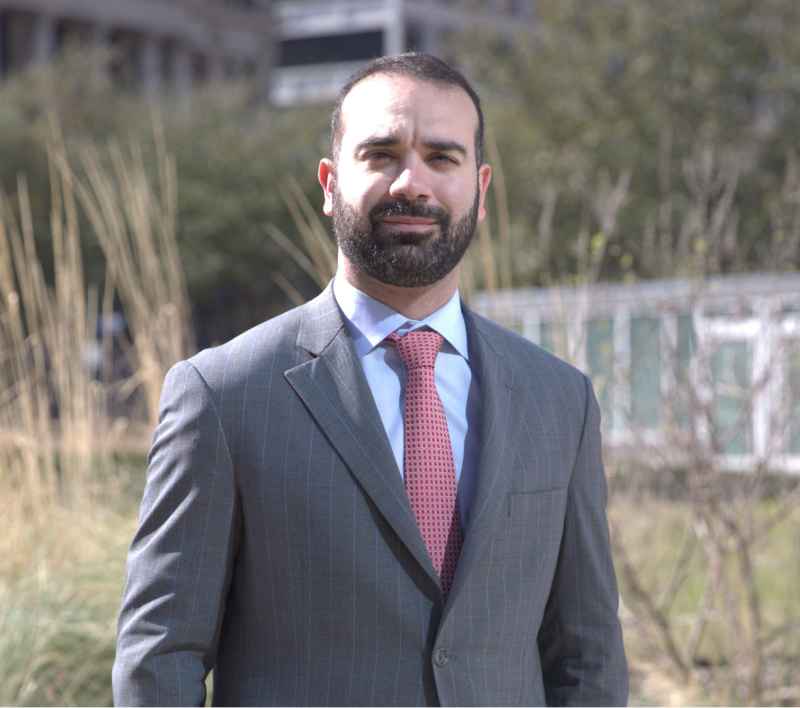
A dedicated legal team can fight the insurance company's unfair tactics and work to secure the resources you need to recover.
If you were injured in a motorcycle accident in the Houston area, contact AP Law Group today at (713) 913-4627 or complete our online contact form. Your consultation is free and confidential. We are ready to stand by your side, and you pay nothing unless we win your case.